
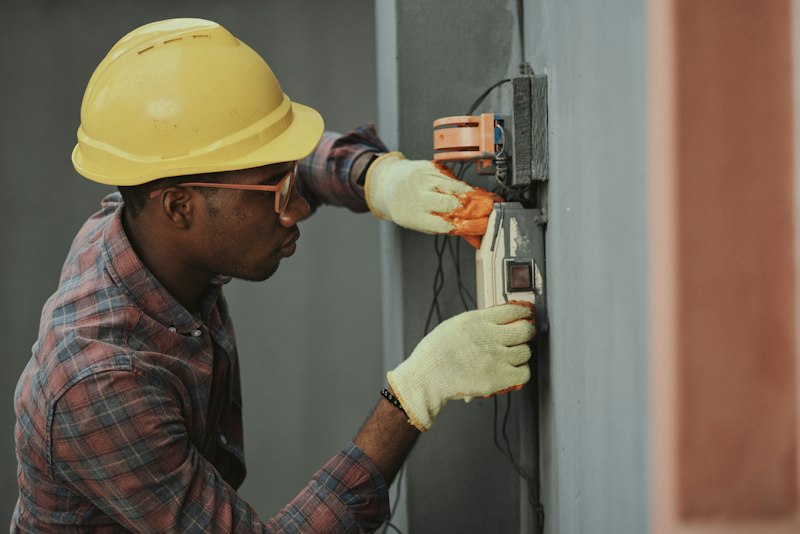
Your home's electrical panel is the backbone of every outlet, light switch, and appliance in the house. Most homeowners ignore it until something fails — and by that point, what could have been a straightforward upgrade has become an emergency. Knowing the warning signs can prevent serious damage and, in the worst cases, an electrical fire that starts silently inside a finished wall.
1. Your breakers trip frequently and won't reset cleanly
A breaker tripping once in a while is normal. A breaker that trips repeatedly under ordinary load, or that won't reset without a fight, is telling you something. Either that circuit is overloaded beyond what the breaker can handle, or the breaker itself has failed. In older panels, both happen together. When multiple circuits trip frequently, the issue is usually the panel itself — not enough capacity for the actual demand your home is placing on it. A licensed electrician can run a load analysis to determine whether your panel is undersized for your current usage.
2. You're adding a major appliance or EV charger
Electric vehicles, heat pumps, electric dryers, induction cooktops, and whole-home generators are high-draw loads that most older panels were never designed to support. A standard 100-amp panel is fine for a modest home with basic appliances. But adding a Level 2 EV charger — which typically draws 40 to 48 amps — to a home already near capacity will trip breakers constantly and stress every component in the panel. Before installing any major appliance, have an electrician assess your available capacity. The answer is often a panel upgrade to 200 or even 400 amps.
3. Your panel is 25 or more years old
Standard circuit breakers are rated for 20,000 to 100,000 operations over their lifetime. In a panel that's 25 or 30 years old, many of those operations have already happened. Breakers that have aged past their rated life may fail to trip when they should — which is far more dangerous than one that trips too often. Additionally, certain manufacturers produced panels through the 1970s and 1990s that are now known to be defective and are flagged by insurance companies and home inspectors nationwide. If your panel is more than two decades old, have it inspected regardless of how it appears to be performing.
4. Lights flicker or dim when appliances cycle on
When your lights dim every time the refrigerator compressor kicks on, or the overhead light in the kitchen flickers when the microwave runs, the panel is struggling to maintain stable voltage across circuits. This happens when the panel is drawing close to its capacity limit. Lights and sensitive electronics can sustain damage from sustained voltage fluctuations over time. Flickering also points to deteriorating grounding and neutral connections inside the panel — a condition that requires professional evaluation before it worsens.
5. You smell burning or see scorch marks near the panel
Any burning smell coming from your electrical panel is an emergency. Shut off the main breaker and call a licensed electrician immediately — not tomorrow, now. Burning odors indicate that wiring insulation is melting or arcing is occurring inside the enclosure. These conditions precede electrical fires. Similarly, any scorch marks, blackening around breaker slots, or melted plastic visible inside the panel door mean the same thing: the panel is failing and needs immediate replacement. There is no safe way to defer this.
What a panel upgrade actually involves
A panel upgrade means removing the existing panel, installing a new main breaker panel at the correct amperage, rewiring the circuits to the new enclosure, and verifying the grounding and bonding. Most jobs take a licensed electrician one to two days. A permit is required in every jurisdiction and triggers at least one inspection by your local building department after the work is complete. Costs vary significantly by region and panel size, but a 200-amp upgrade typically runs $1,500 to $4,000 all-in, including labor, materials, and permit fees.
Ready to find a Electrical professional?
Every contractor on Smart Choice is local and professional, with reviews from real homeowners. Getting quotes is free and takes about two minutes.
Contributing writer at Smart Choice Constructions with expertise in home improvement, contractor selection, and residential construction.